
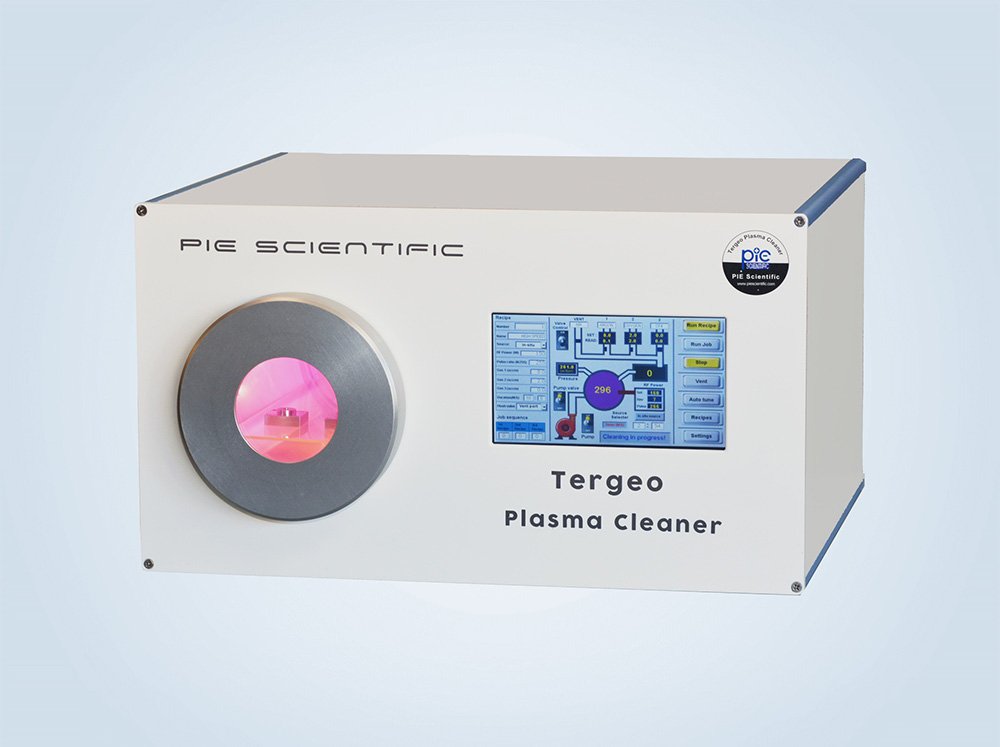
 Which Tergeo fits your lab?
Argon plasma cleaning
Argon is an inert gas: argon plasma cleans by gentle ion bombardment instead of chemical reaction. It removes organic contamination, thin oxides and fluoride residues without oxidizing the surface — the go-to recipe for metal bond pads, thin metal films and other oxidation-sensitive parts.
- No surface oxidation
- Removes thin oxide & fluoride
- Ar, Ar + O₂ or Ar + H₂
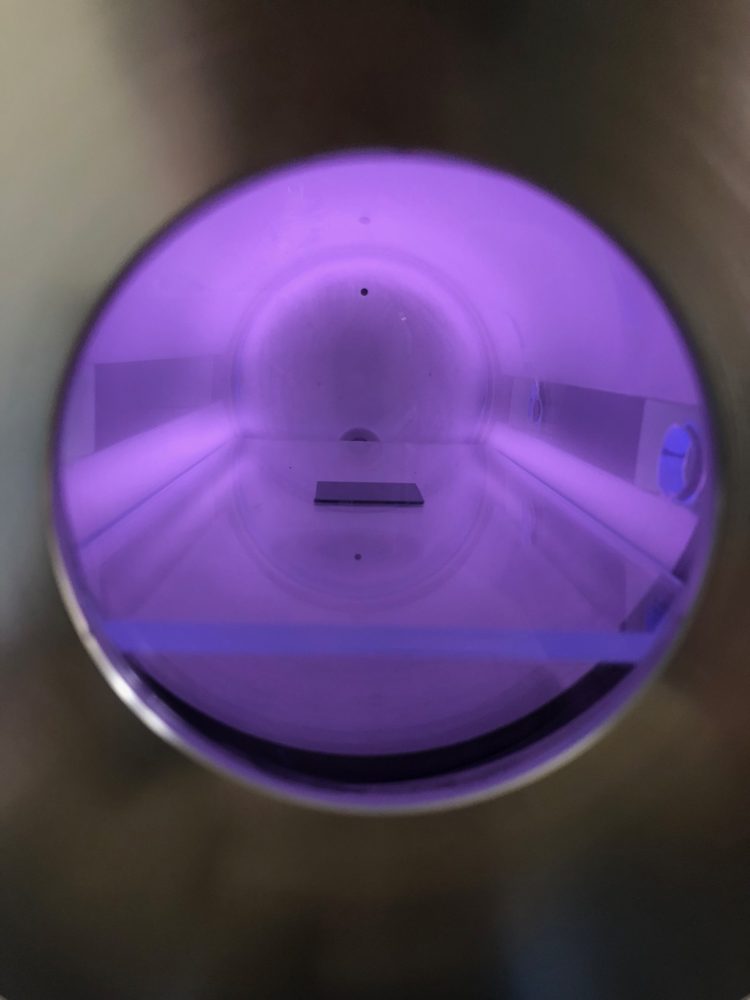
Physical cleaning, no chemistry
In the plasma, argon atoms are ionized and accelerated toward the sample surface by the sheath voltage. Each impact transfers momentum and knocks loosely bound molecules and the top atomic layers off the surface (sputtering). Because argon does not react with the surface, nothing new is grown on it — unlike oxygen plasma, which leaves a thin oxide on metals.
Argon cleaning depends on ions, so it works best in direct (immersion) mode, where the sample sits in the plasma. Argon is also often added to hydrogen or oxygen to stabilize pressure and the discharge.
When to choose argon
- Copper, silver, aluminum, cobalt and other oxidation-sensitive metals
- Bond pads before wire bonding — removes thin oxide and fluoride
- Lead frames and substrates before die attach
- Thin metal films where any added oxide raises contact resistance
- Gentle roughening before adhesive bonding
Argon vs oxygen vs hydrogen plasma cleaning
| Gas | Mechanism | Best for | Watch out for |
|---|---|---|---|
| Argon (Ar) | Physical ion bombardment (sputtering) | Metals and oxidation-sensitive surfaces; thin oxide and fluoride removal | Slower on thick organics; needs direct mode |
| Argon + oxygen | Ions plus oxygen radicals | Faster organic removal with some physical assistance; TEM holders | Oxidizes sensitive metals |
| Argon + hydrogen | Ions plus atomic hydrogen (reduction) | Oxide reduction and carbon removal with stable pressure | Hydrogen gas handling |
| Oxygen | Chemical oxidation of organics | Fastest cleaning, activation, ashing | Grows oxide on metals |
| Hydrogen | Chemical reduction | Native-oxide reduction, carbon removal on metals and III-V | Flammable gas; pressure control |
Argon plasma cleaning results
Sub-3 nm cobalt film: sheet resistance down 16%
A customer's cobalt film thinner than 3 nm carried native oxide and hydrocarbon contamination. Before cleaning, two-point resistance readings jumped from a few hundred ohms to the megaohm range. A 2-minute pure-argon plasma (10 sccm Ar, 50 W, direct mode) in a Tergeo plasma cleaner made the reading stable, and the customer's four-point probe showed sheet resistance falling from 98.2 to 82.0 Ω/sq — a 16% reduction — without damaging the film.
Pure hydrogen and Ar/H₂ mixtures were tested on the same film; see hydrogen plasma cleaning.
Silver bond pads before wire bonding


Argon plasma made tarnished silver pads brighter after the organic contamination and silver oxide layer were removed, and wire-bond pull force improved significantly after 3 minutes of pure argon plasma. Wire bonding application note.
Argon plasma cleaners
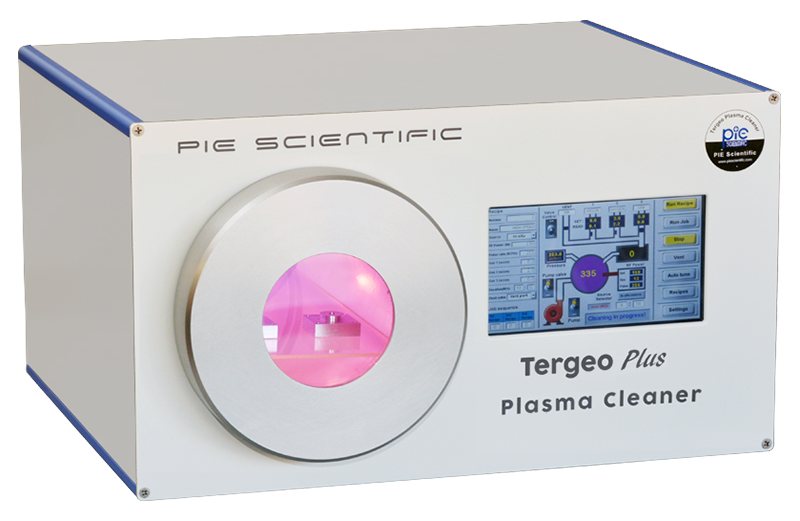
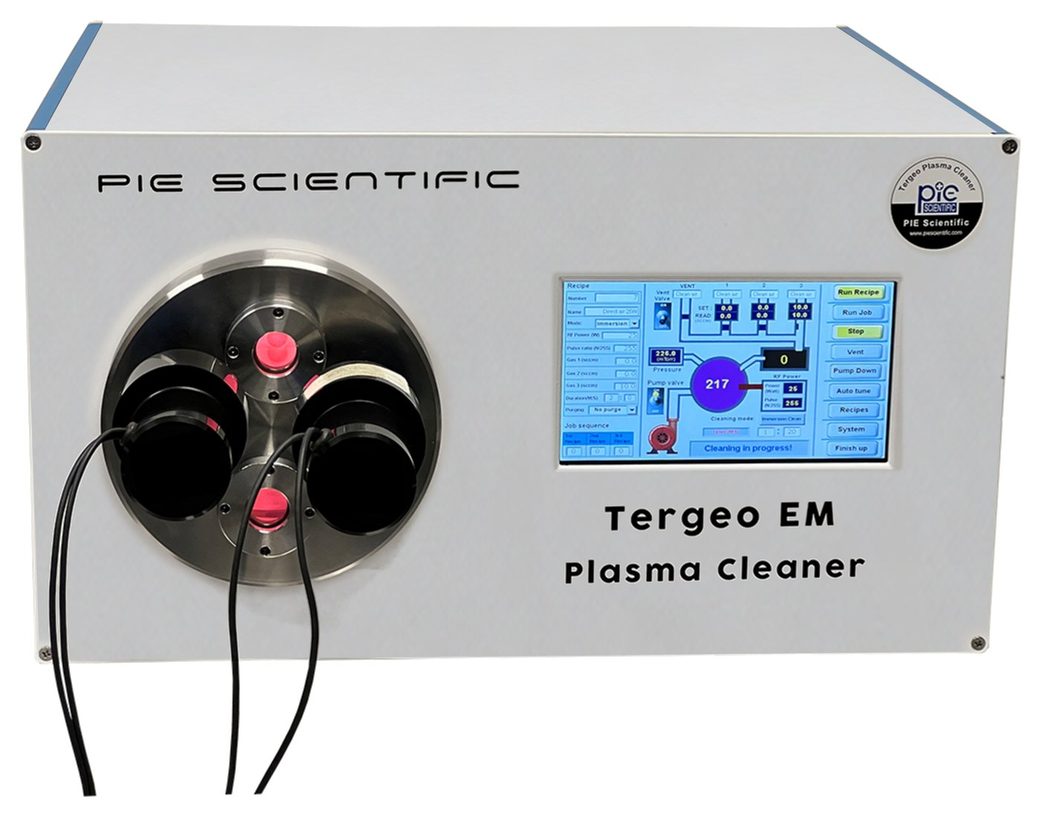
Tergeo systems run argon, oxygen, hydrogen and mixtures from up to three mass flow controllers — with direct mode for argon ion cleaning and, on most models, downstream mode for gentle radical cleaning.


Argon plasma cleaning questions
What does argon plasma cleaning remove?
Thin organic contamination, weakly bound particles and thin surface layers such as native oxide and fluoride residues, by physical sputtering. It does not oxidize the surface.
Is argon or oxygen plasma better for cleaning?
Oxygen is faster for organics and activates surfaces; argon is better when oxidation must be avoided, such as on copper or silver bond pads and thin metal films. Ar + O₂ mixtures combine physical and chemical cleaning.
Should I use direct or downstream mode for argon?
Direct mode. Argon cleans with ions, and ions only reach the sample when it sits in the plasma. Downstream mode is for radical chemistry (oxygen, hydrogen).
How long does argon plasma cleaning take?
Typically one to a few minutes at moderate power — for example 2 minutes at 50 W in our cobalt-film test. Longer exposure or higher power removes more material, so start conservatively on thin films.
Not sure which plasma cleaner fits your process?
Tell us your samples, size and process gas. Our engineers reply within one to two business days with a recommendation and a quote.