
Unlocking Nanomaterials’ Potential through Precision Plasma Processing
Vacuum plasma etching and surface treatment have become fundamental technologies in nanomaterials research, particularly for two-dimensional (2D) materials such as graphene and transition metal dichalcogenides (e.g., MoS₂), and one-dimensional (1D) materials like carbon nanotubes. They can clean, etch, or functionalize material surfaces with fine control. These methods are integral to applications in electronics, sensing devices, energy storage, and more, providing controlled, reproducible methods for surface cleaning, material exfoliation, precise patterning, and chemical surface modification.
Key Plasma Treatment Processes:
- Oxygen Plasma: Primarily used for organic contaminant removal, oxygen plasma effectively “ashes” away residues without wet chemicals. In graphene applications, oxygen plasma provides precise patterning through controlled oxidation but requires careful management to minimize lattice disruption.
- Argon Plasma: As an inert gas plasma, argon offers gentle physical sputtering, effectively removing contaminants from sensitive surfaces without inducing chemical alterations. This makes argon ideal for cleaning samples prior to analysis or subsequent processing steps.
- Fluorine-based Plasmas (CF₄, SF₆): Fluorinated plasma treatments excel in etching more chemically resistant materials, such as MoS₂. These plasmas also introduce beneficial surface functionalities, enhancing properties such as hydrophobicity, electrical insulation, or chemical reactivity.
- Nitrogen Plasma: Nitrogen plasma provides functional nitrogen-containing groups, boosting performance in sensor technologies and improving compatibility with composite materials. Nitrogen doping through plasma processing is an efficient route to modify electrical and chemical properties.
- Hydrogen Plasma: Renowned for its gentle passivation abilities, hydrogen plasma repairs defects, reduces surface oxidation, and enhances electrical conductivity. Its reversible nature allows for temporary surface modifications that can be reversed with mild annealing.
Featured Plasma System:
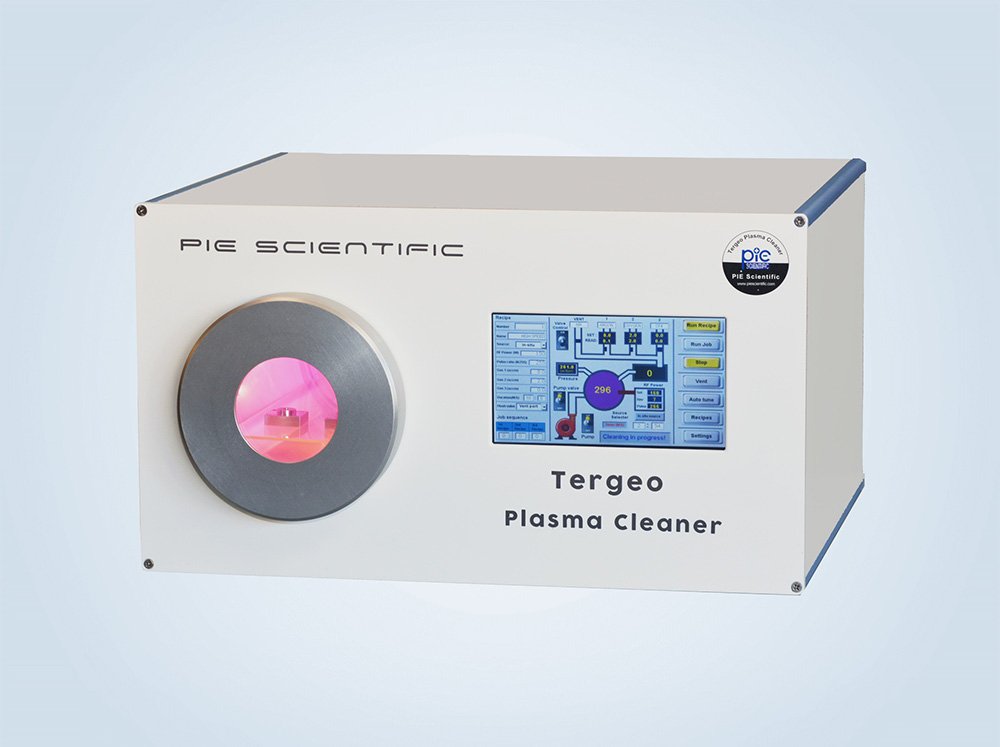
The Tergeo plasma system by PIE Scientific LLC is highly favored in research due to its exceptional versatility. It supports both direct plasma treatment—ideal for robust applications requiring stronger interactions—and downstream (remote) plasma, suited for delicate or highly sensitive materials. Furthermore, its capacity for pulsed plasma operation enables ultra-low-intensity treatments, significantly reducing potential damage during processing. Tergeo systems also feature built-in plasma intensity monitoring, providing researchers real-time feedback and enabling precise, reproducible control of plasma conditions.
Current Research Applications:
Advanced plasma techniques have demonstrated significant promise in recent studies:
- Plasma-assisted exfoliation: Enables controlled thinning of layered materials, providing researchers with precisely tailored thicknesses for specialized applications.
- High-resolution nanopatterning: Allows the creation of intricate structures essential for advanced nanoelectronics, enhancing device miniaturization and performance.
- Chemical surface modification: Employs plasma processes to alter surface chemistry intentionally, enabling tailored interactions with biological, chemical, or electronic environments. Typical applications include graphene oxidation with oxygen plasma. Graphene functionalization with oxygen, hydrogen, CF4 plasma.
Future Outlook:
- Plasma-based material synthesis: Expanding plasma applications to the direct growth of advanced materials.
- Real-time in situ monitoring: Incorporating additional advanced diagnostic tools within plasma systems to achieve even greater control and reproducibility.
- Integration with semiconductor manufacturing: Developing compatible plasma techniques to facilitate large-scale industrial adoption.
These advancements promise significant performance gains across diverse technological fields, driving innovation at the frontier of materials science and nanoengineering.
Click here to learn more about how plasma etching and treatment can facilitate 2-D and 1-D materials research.