
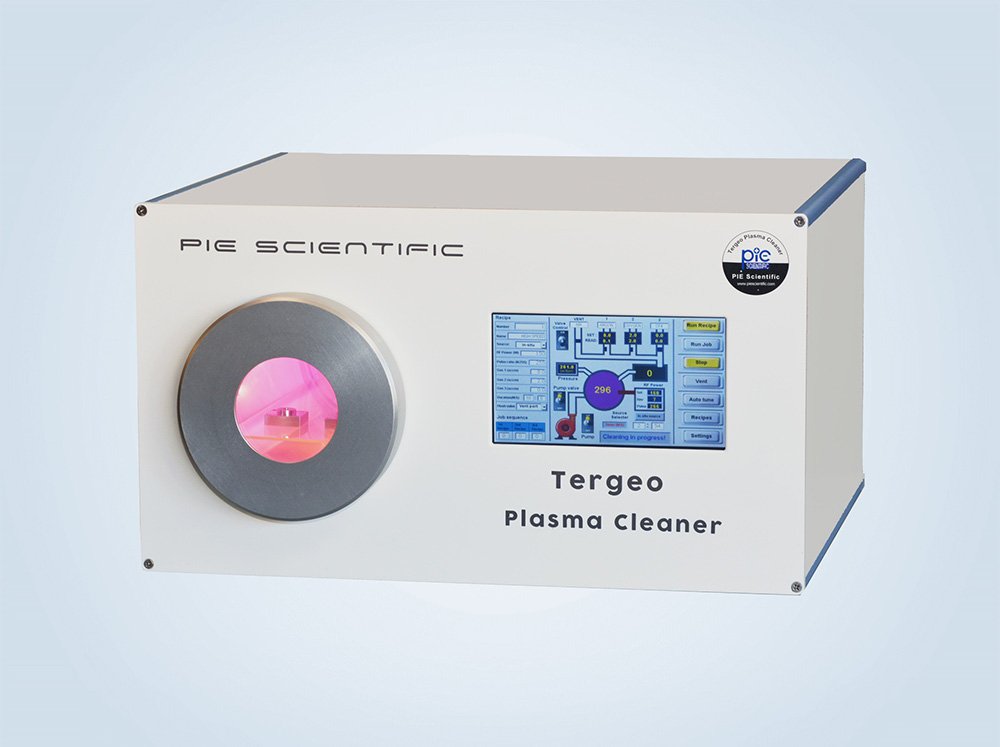
 Which Tergeo fits your lab?
Hydrogen plasma cleaning systems
Atomic hydrogen chemically reduces native oxides and turns carbon contamination into volatile hydrocarbons — cleaning metals, semiconductors and optics without growing new oxide. PIE Scientific offers hydrogen plasma in tabletop Tergeo systems and in the in-situ SEMI-KLEEN Sapphire source.
- Oxide reduction, no oxidation
- Carbon removal
- Tabletop or in-situ
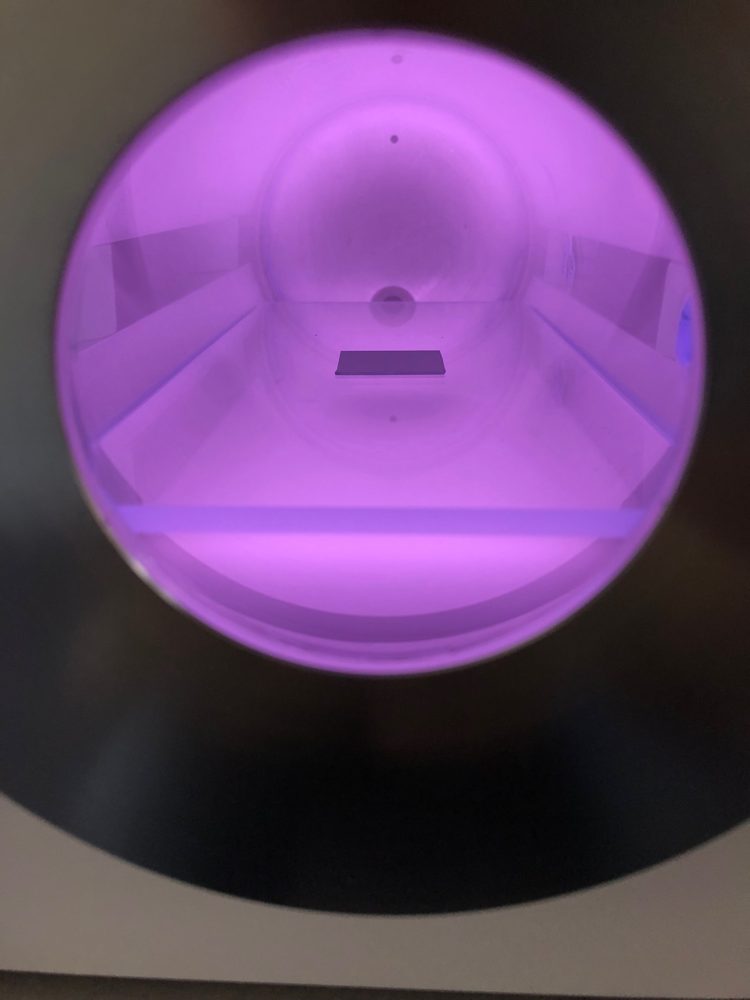
Chemical reduction instead of oxidation
A hydrogen plasma produces a high density of atomic hydrogen. Atomic H reacts with metal oxides (for example CoO + 2H → Co + H₂O) and with carbon contamination (forming CH₄ and other volatile species), which the pump removes. The cleaned surface stays metallic — the opposite of oxygen plasma, which removes carbon but leaves an oxide.
Because the cleaning is chemical, hydrogen works in both direct and downstream (remote) mode, so delicate films can be cleaned with radicals alone. Adding argon (about 10 sccm in our tests) stabilizes pressure, since light hydrogen molecules are harder for ordinary vacuum pumps to remove.
Typical uses
- Native-oxide reduction on Cu, Co, Ag and other metal films
- Oxide and carbon removal on InGaAs and other III-V surfaces before ALD and XPS
- Carbon removal from EUV optics and chambers
- Bondable PTFE / Teflon surfaces
- Oxidation-sensitive TEM samples (Ar + H₂)
- Cleaning before wire bonding on oxidizable pads
Hydrogen plasma cleaning of a sub-3 nm cobalt film
Customer-supplied cobalt films thinner than 3 nm with native oxide and hydrocarbon contamination, cleaned in a Tergeo plasma cleaner. Sheet resistance measured afterwards by the customer with a four-point probe.
| Condition | Gas (sccm) | RF / mode | Time | Sheet resistance | Change |
|---|---|---|---|---|---|
| Pure hydrogen | H₂ 1 | 150 W, direct | 5 min | 109.9 → 82.0 Ω/sq | −25.4% |
| Pure hydrogen | H₂ 1 | 50 W, direct | 5 min | 99.8 → 80.8 Ω/sq | −19.1% |
| Pure argon (comparison) | Ar 10 | 50 W, direct | 2 min | 98.2 → 82.0 Ω/sq | −16.4% |
| Argon + hydrogen | Ar 10 / H₂ 3 | 50 W, direct | 6 min | 99.0 → 87.1 Ω/sq | −12.0% |
| Argon + hydrogen, remote | Ar 10 / H₂ 3 | 100 W, downstream | 4 min | 99.2 → 87.6 Ω/sq | −11.7% |
| Pure hydrogen, remote | H₂ 1 | 100 W, downstream | 2 min | 97.8 → 88.9 Ω/sq | −9.1% |
Before cleaning, two-point resistance readings jumped from a few hundred ohms to the megaohm range; after cleaning they were stable and lower. Four-point measurements were made five to six days after cleaning, so some re-oxidation is included. A heavily pulsed 25 W run delivered too little energy and showed no change. MFC flows are air-calibrated: consistent, but not absolute for hydrogen.
InGaAs: oxygen and carbon gone after 2 seconds of H₂ plasma
A SEMI-KLEEN source on an XPS load-lock removed the oxygen and carbon signals from InGaAs with just a 2-second hydrogen plasma, while the In, Ga and As substrate peaks increased — a clean surface for the next film or analysis step.
Data courtesy of Prof. A. Kummel, UC San Diego.

Hydrogen plasma systems

Tergeo series (tabletop)
H₂, Ar + H₂ and other gases from up to three MFCs; direct and pulsed modes; Tergeo, Tergeo-Plus and Tergeo-Pro chamber sizes.
Tabletop systems →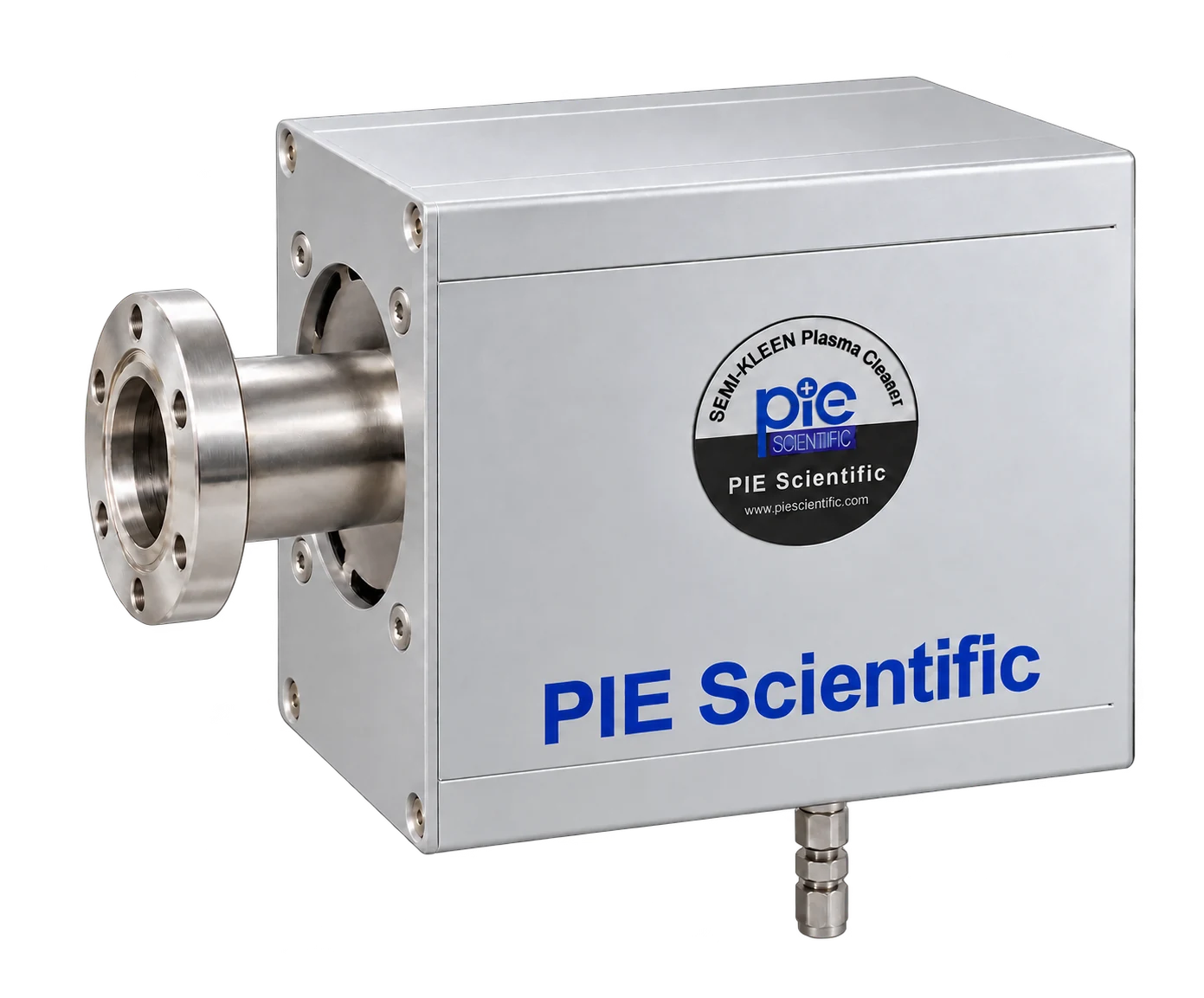
SEMI-KLEEN Sapphire (in-situ)
Sapphire plasma tube for hydrogen, NF₃, CF₄ and SF₆ plasma inside EUV, deposition and analysis tools; operates from <0.5 mTorr to over 2 Torr.
SEMI-KLEEN Sapphire →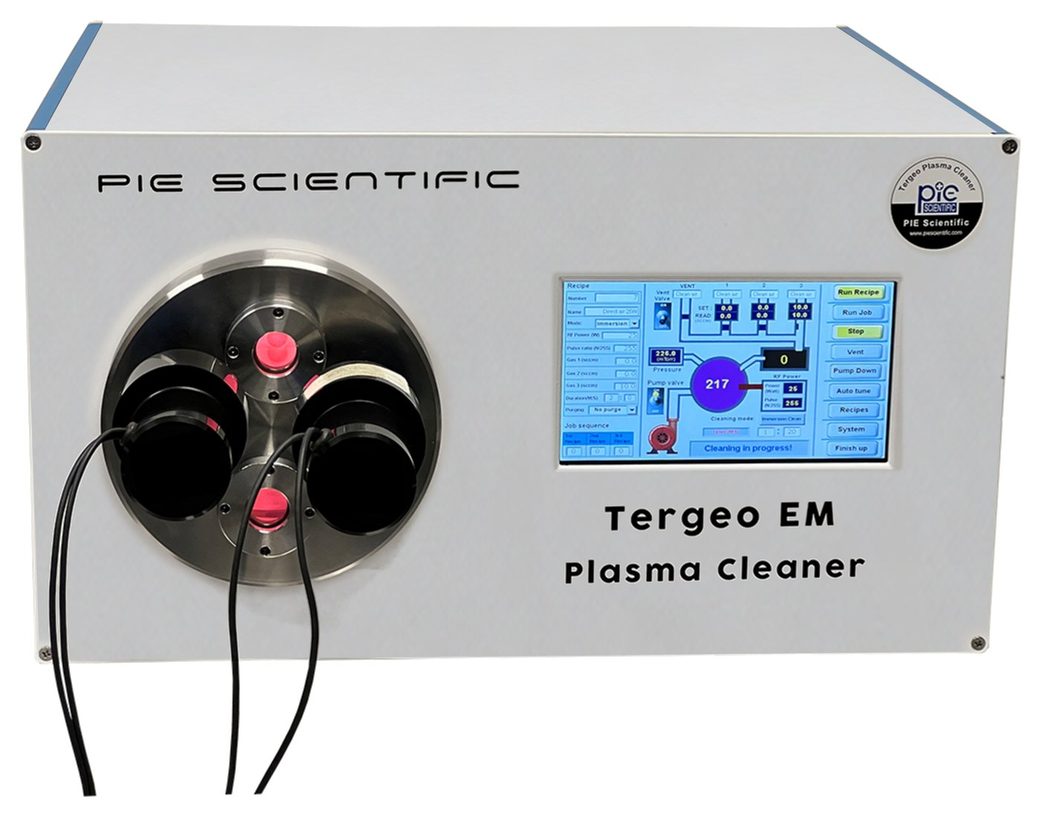
Tergeo-EM
Ar + H₂ plasma for oxidation-sensitive TEM samples and holders.
TEM plasma cleaner →Why sapphire for in-situ hydrogen plasma?
Hydrogen plasma slowly etches quartz and creates volatile silanol fragments that can contaminate sensitive semiconductor and EUV-optics chambers. Sapphire (Al₂O₃) has no volatile Al–H chemistry in this regime, so the SEMI-KLEEN Sapphire source is the preferred choice for hydrogen plasma in those tools.
Hydrogen plasma cleaning questions
What does hydrogen plasma cleaning do?
Atomic hydrogen reduces native metal oxides back to metal and removes carbon contamination as volatile hydrocarbons, leaving a clean, unoxidized surface.
Hydrogen or argon plasma for oxide removal?
Hydrogen removes oxide chemically and works in gentle downstream mode; argon removes it physically by ion sputtering in direct mode. In our cobalt-film test pure hydrogen gave the largest sheet-resistance drop (25%), argon 16%.
Is hydrogen gas safe to use in a plasma cleaner?
Hydrogen is flammable, so supply, venting and exhaust must follow your site's gas-safety rules; low flows (a few sccm) are typical, and argon/hydrogen mixtures are common. Our engineers can advise on gas handling for your installation.
Can hydrogen plasma run in an existing vacuum tool?
Yes — the SEMI-KLEEN Sapphire remote plasma source mounts on a spare port of the load-lock or process chamber and cleans in situ without venting.
Not sure which plasma cleaner fits your process?
Tell us your samples, size and process gas. Our engineers reply within one to two business days with a recommendation and a quote.