
 Which Tergeo fits your lab?
Parylene removal by oxygen plasma for failure analysis
Parylene conformal coatings protect PCBs, sensors, MEMS and medical implants because they resist almost every solvent — which is exactly why they are hard to remove for failure analysis or rework. Oxygen plasma removes parylene cleanly and tells you when it is done.
- ≈230 nm/min at 150 W
- Automatic end-point reading
- Electrical contact restored
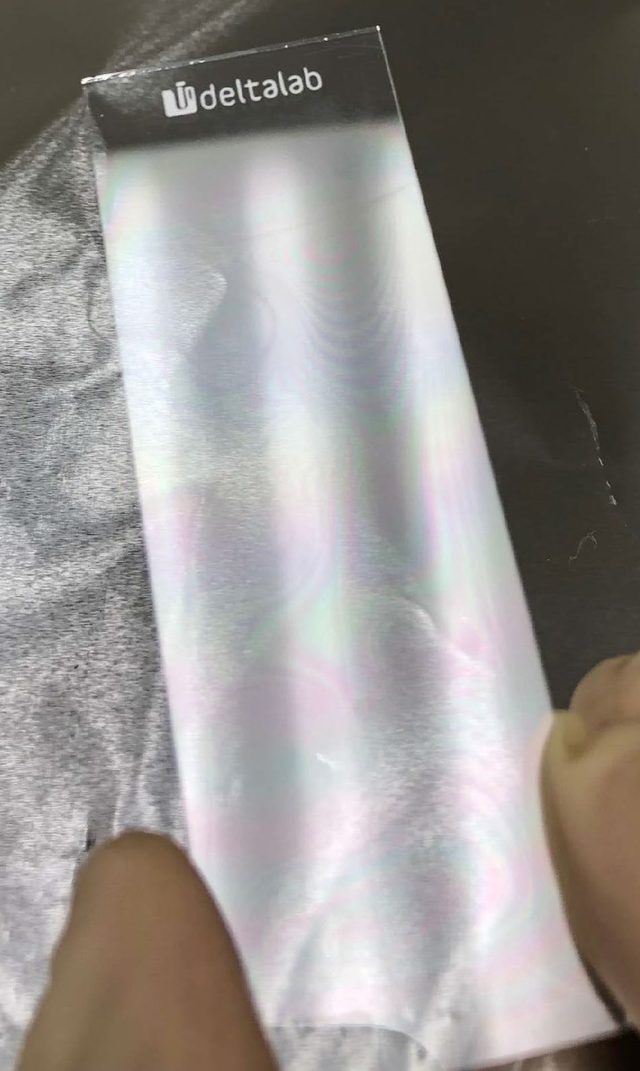
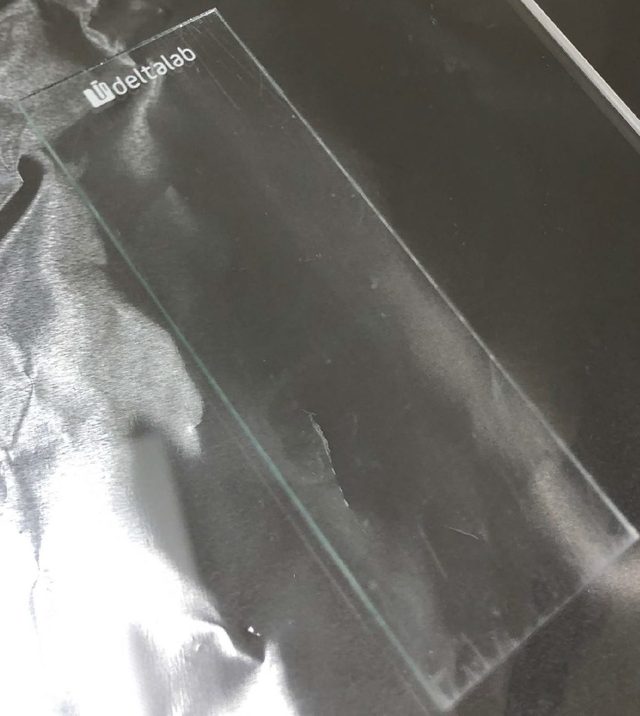
Parylene film on glass, 150 W direct mode
Customer-supplied glass slides coated on both sides with ≈4.67 µm parylene. Recipe 1: 150 W, 5 sccm O₂, 92 mTorr, direct (immersion) mode, run in 5-minute steps in a Tergeo plasma system.
| Total time | Plasma emission reading | Observation |
|---|---|---|
| Empty chamber | 94 | Pure O₂ baseline |
| 5 min | ≈210 | By-products (H₂O, COₓ) raise the reading; film still soft and scratchable |
| 10 min | ≈210 | Two spots cleared |
| 15 min | 205 | Top corner mostly cleared |
| 20 min | 99 | Film mostly removed; surface can no longer be scratched |
| 25 min | 91 | At baseline — film completely gone |
Estimated etch rate ≈230 nm/min (4.67 µm in ≈20 min).
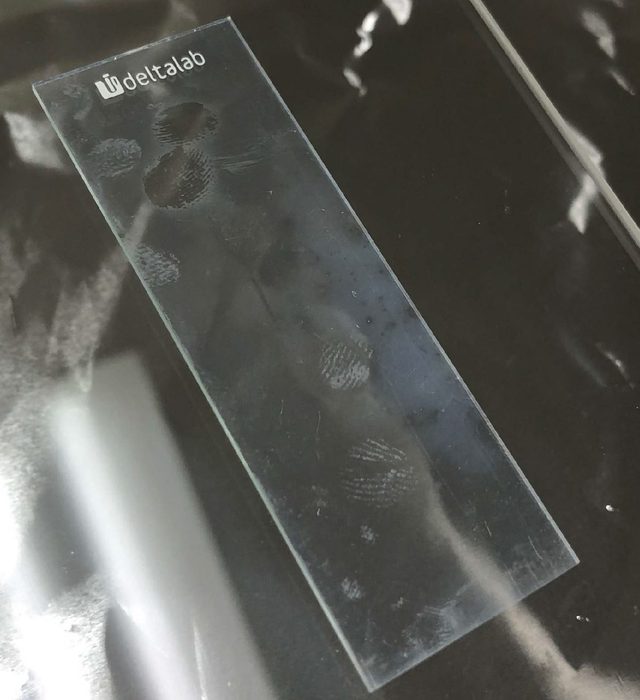
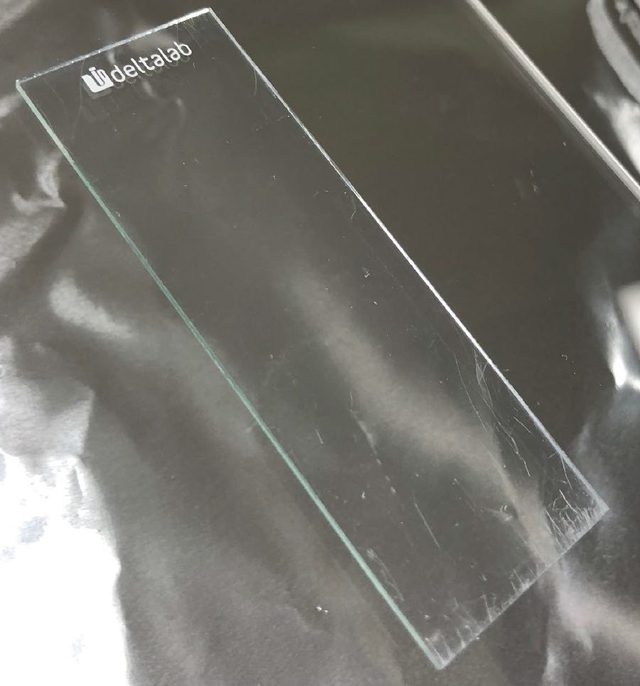
Test 2: higher pressure, 3× the oxygen flow
Recipe 2 (150 W, 15 sccm O₂, 205 mTorr) on the less uniform back side: the reading started at 123 and fell to 96 within the first 10 minutes, then to 76 and 69 against a 68 baseline after 15 and 20 minutes, with only isolated thick islands left. The emission reading tracked exactly what was seen on the glass — it can be trusted as the end-point signal.
Restoring electrical contact on coated aluminum
A parylene-coated aluminum part was etched for 20 minutes per side with a similar recipe (150 W, 5 sccm O₂, 90 mTorr). Before etching, the surface resistance was beyond the meter's range; afterwards it read 0.3 Ω — the meter's lower limit. The thin-film interference colors visible before etching are gone afterwards.
That is the result failure analysts need: bare, conductive metal for probing, cross-sectioning or re-work, with no solvent residue.
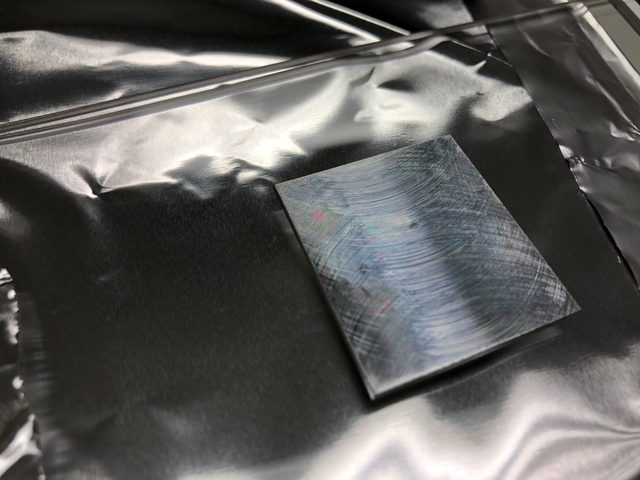
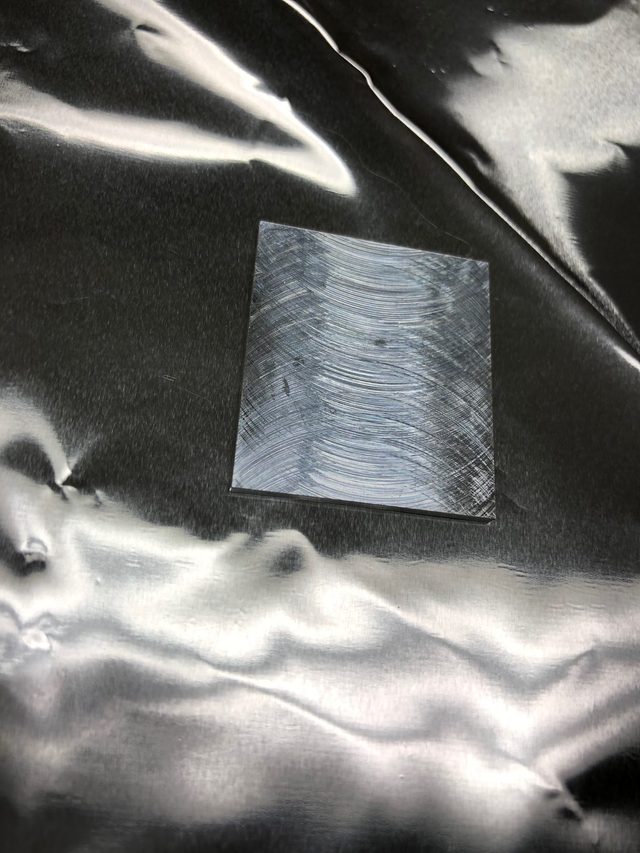
Parylene plasma removal in practice
End point you can read
Etch by-products raise the plasma emission; when it returns to the O₂ baseline the coating is gone. This works when the material underneath resists oxygen plasma (metal, glass, silicon, ceramics).
Coatings are rarely uniform
Thick spots, edges and the back side of a part clear last. Follow the emission reading instead of a fixed time.
Local or full removal
Plasma removes parylene everywhere it can reach. Mask areas you want to keep, or use it to strip whole boards and parts.
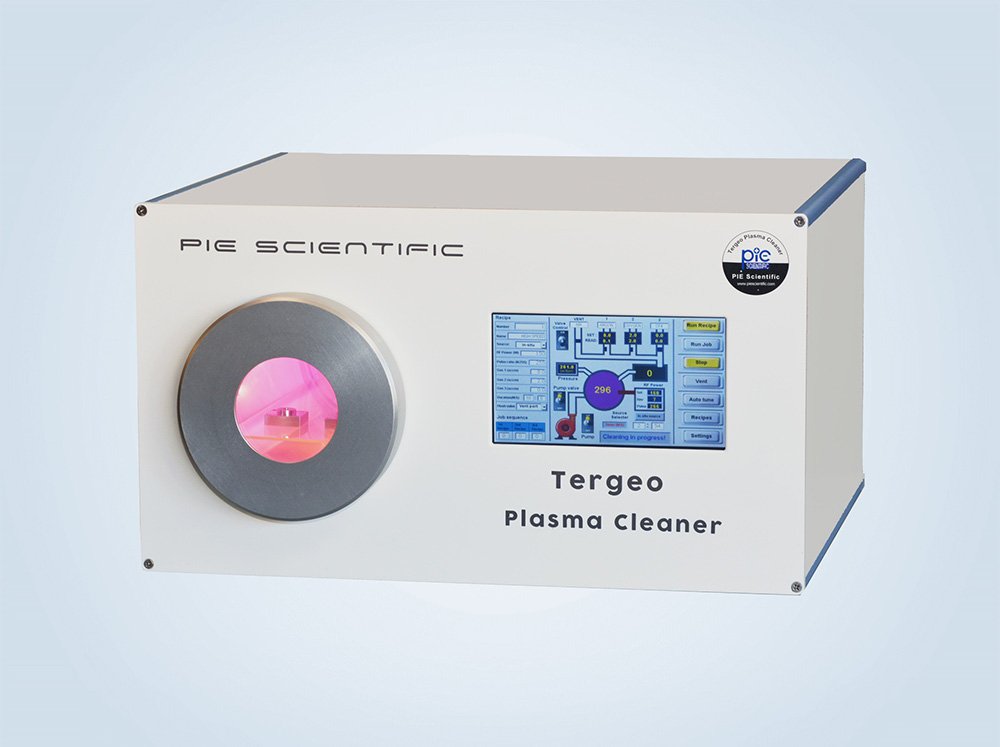
Recommended systems: Tergeo (150 W) for small parts; Tergeo-Plus and Tergeo-Pro (up to 500 W) for boards and batches. Related: polyimide ashing, plasma for failure analysis.
Parylene removal questions
How fast does oxygen plasma remove parylene?
About 230 nm per minute in our test (150 W, 5 sccm O₂, 92 mTorr, direct mode) — a 4.7 µm coating clears in 20–25 minutes. Rate depends on power, pressure, part size and loading.
Will the plasma damage the circuit underneath?
Oxygen plasma does not etch metals, glass, ceramics or silicon, so it stops at the substrate. Other organic materials exposed to the plasma — solder mask, adhesives, plastic housings — will also be etched, so mask them if needed.
How do I know the parylene is completely removed?
Watch the plasma emission intensity on the Tergeo touchscreen. It rises while parylene is etching and returns to the pure-oxygen baseline when the coating is gone. A simple continuity or resistance check confirms it.
Not sure which plasma cleaner fits your process?
Tell us your samples, size and process gas. Our engineers reply within one to two business days with a recommendation and a quote.