
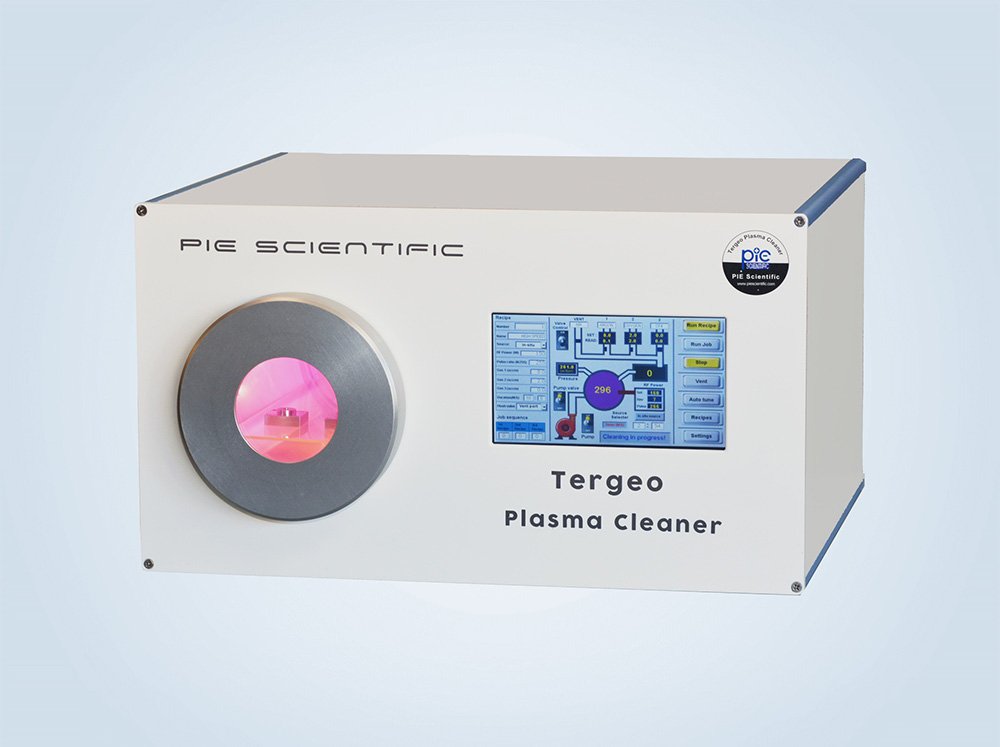
 Which Tergeo fits your lab?
Oxygen plasma ashing of polyimide
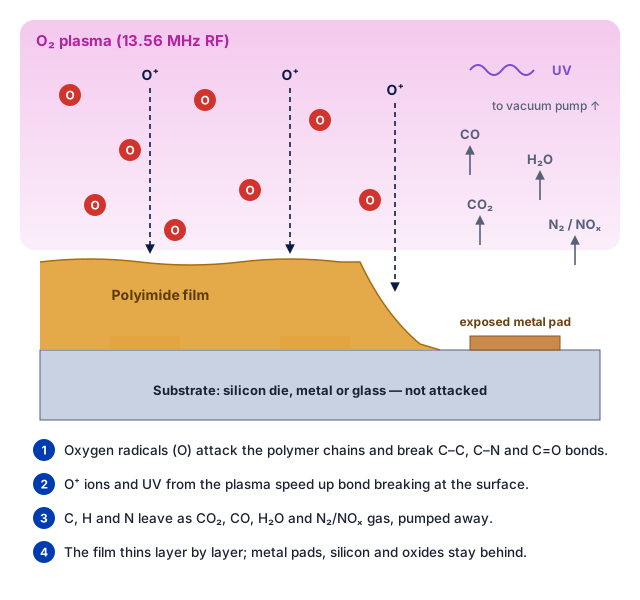
Polyimide is everywhere a device needs a tough, insulating polymer: die passivation and stress-buffer layers, flexible circuits, and the insulation of implantable electrodes and neural probes. Oxygen-based plasma removes it dry and evenly, exposing the metal and silicon underneath for inspection, probing or rework.
- Ar + O₂ plasma
- 25 µm film removed in ≈3 h
- No solvents, no hot acids
Removing a 25 µm polyimide film
Sample: polyimide tape with a 1 mil (25 µm) polyimide film on a silicone adhesive, 2.7 mil (68 µm) total. Ashed with argon + oxygen plasma in a Tergeo plasma system.
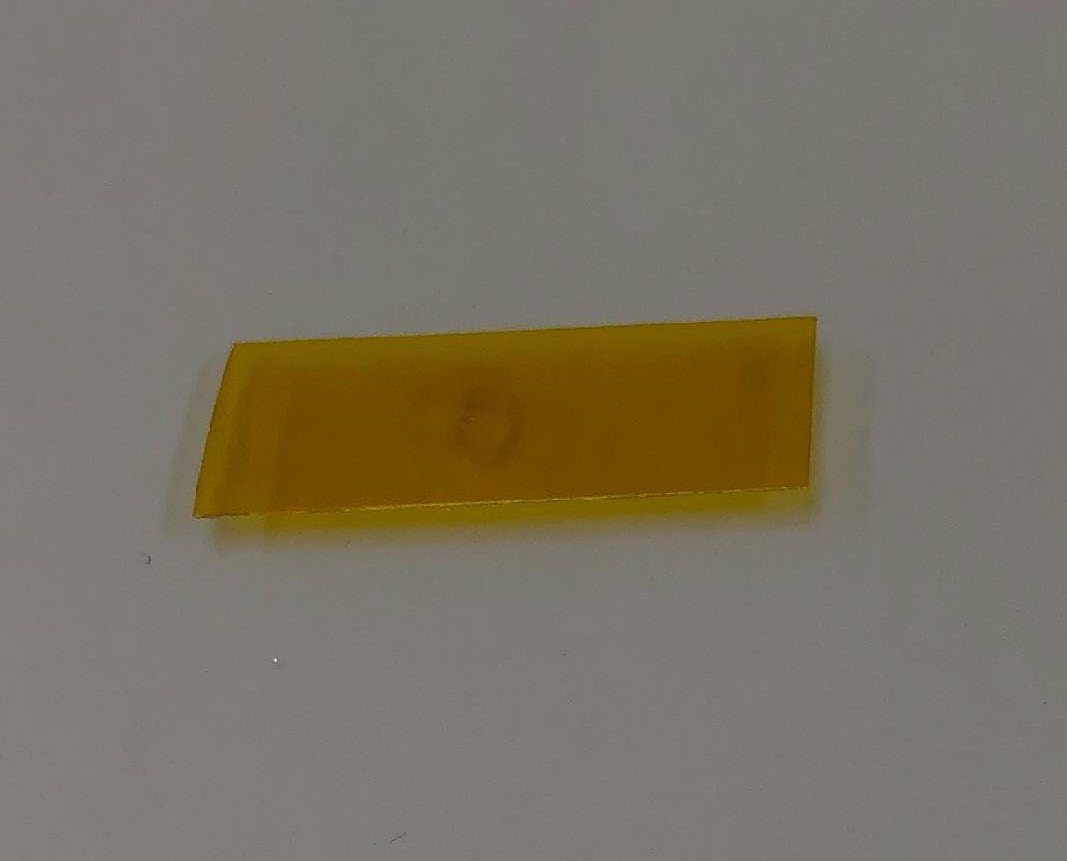
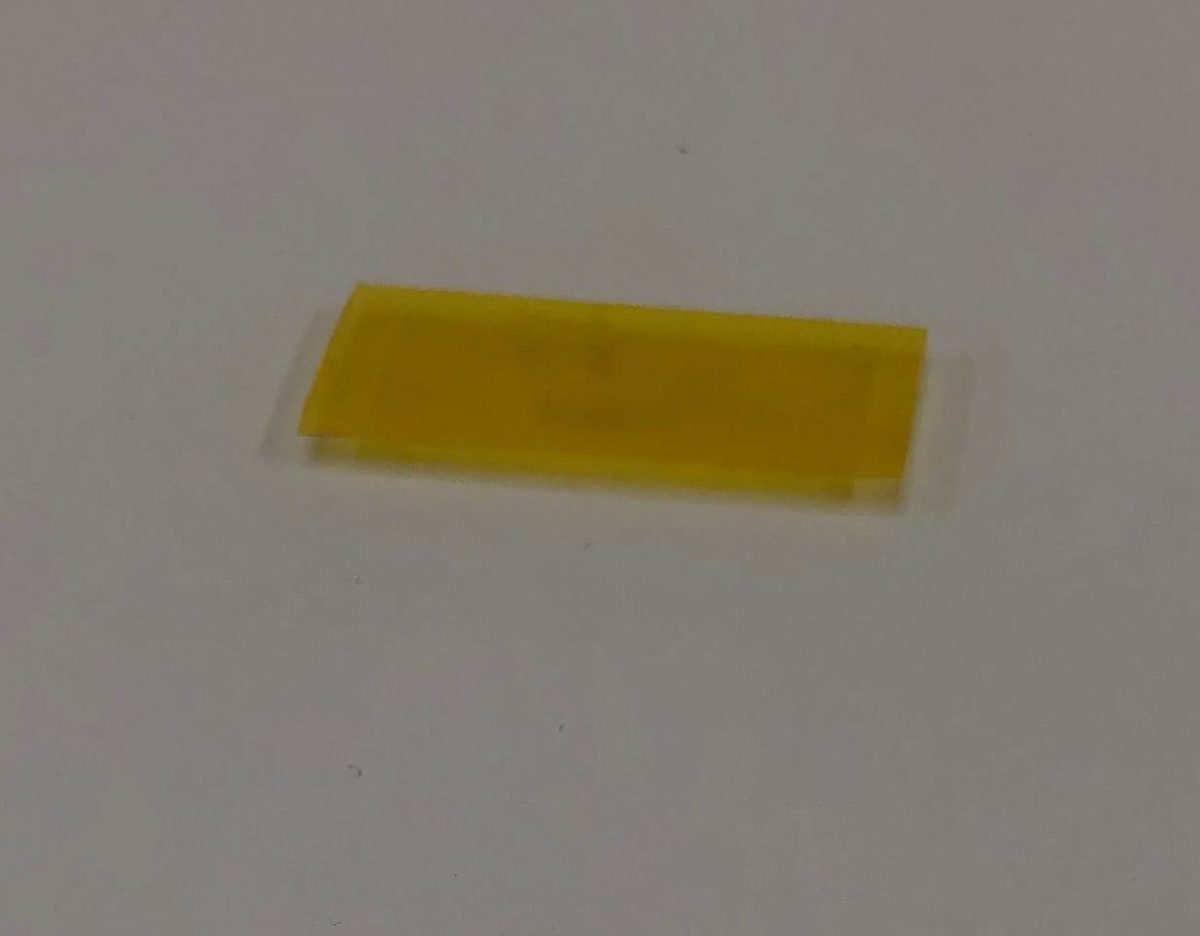
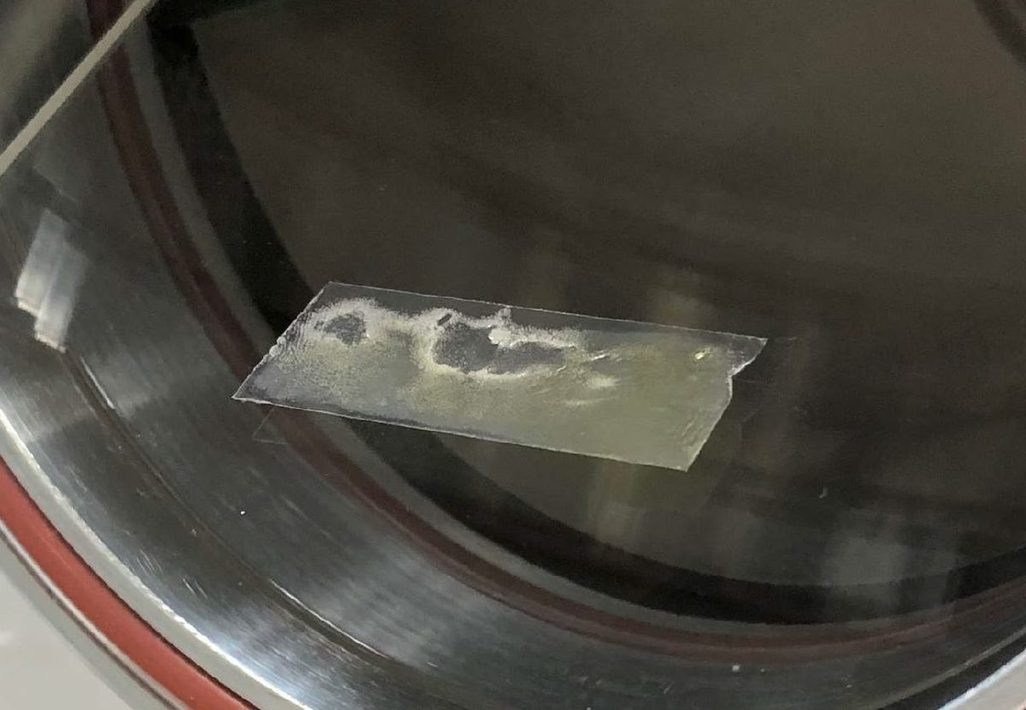
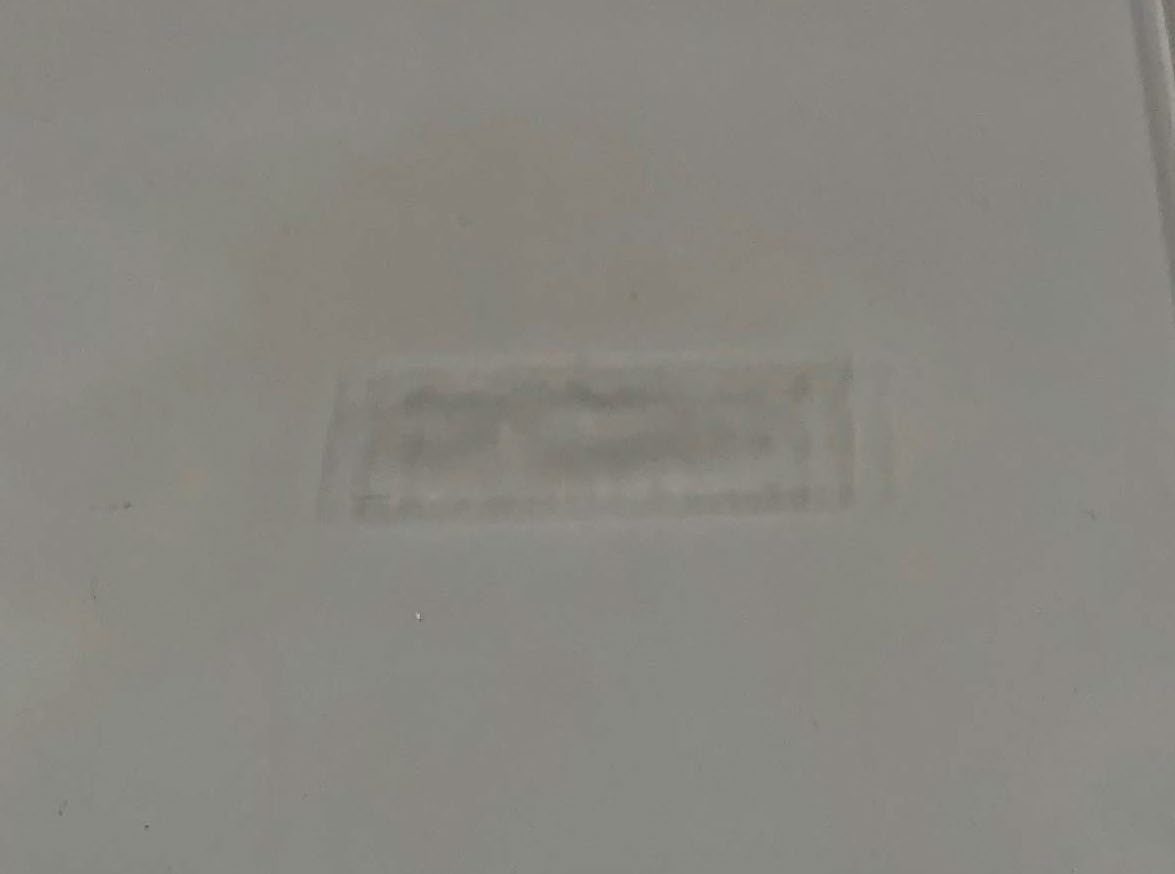
Silicone (PDMS-type) adhesive ashes much more slowly than polyimide in oxygen: its silicon backbone converts to a silica-like skin. A fluorine-containing gas such as CF₄ added to the oxygen speeds up removal of silicone and silicon-containing residues.
Where polyimide removal is needed
Electronics failure analysis
Strip polyimide or PBO passivation and stress-buffer layers from die and wafer-level packages to inspect and probe the metal underneath. Oxygen plasma removes the layer evenly and does not etch aluminum or copper (copper surfaces may lightly oxidize).
Flexible circuits & packaging
Open polyimide coverlays, clean via and pad openings, and remove polyimide residue (desmear) before plating or bonding.
Biomedical devices
Polyimide insulates many implantable electrodes, neural probes and flexible sensors. Plasma ashing exposes electrode sites, removes insulation for failure analysis and cleans devices before coating.
Faster, more controlled polyimide etching
- Direct (immersion) mode for speed; downstream mode when the device underneath is delicate.
- More power, more speed: Tergeo-Plus and Tergeo-Pro run up to 500 W for thick films.
- Add CF₄ (a few percent in O₂) to increase the polyimide etch rate and clear silicon-containing residues.
- Watch the end point: the plasma emission reading drops when the polyimide clears, provided the layer below resists oxygen plasma.
- Mask what you want to keep: polyimide etching is isotropic; use a hard mask or aluminum foil for local openings.
Not sure which plasma cleaner fits your process?
Tell us your samples, size and process gas. Our engineers reply within one to two business days with a recommendation and a quote.